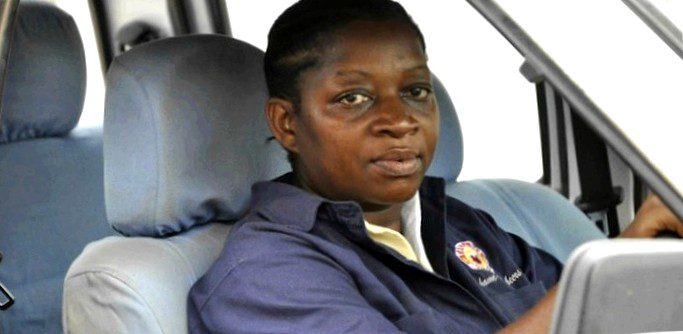
Dar es Salaam (IDN/afr). Mwajuma Ramadhani steers her cab through the vibrant streets of Kariakoo district. Suddenly a motorcyclist cuts her off. Ramadhani is just able to swerve to the right and bring her vehicle to a stop. "You would have caused an accident if I hadn't been so careful," she shouts at the biker as he stares at her in perplexity.
"I experience provocations like this almost every day," Ramadhani laments. Then she shouts in the direction of the motorcyclist. "I ignore inconsiderate drivers like him. Just because a woman is behind the wheel, he thinks he has an advantage."In the megacity of Dar es Salaam, the 41-year-old female cab driver is still the exception in the passenger transport business. But she hopes to assert herself among her male colleagues and soon be her own boss.
Women at the wheel in Dar es Salaam are in and of themselves nothing out of the ordinary. Many women from affluent backgrounds drive their own cars through the streets of the metropolis. But quite a few male cab drivers are not very enthusiastic about suddenly having female competition. However, they will have to get used to the dawn of new times: Initiatives such as Africa International's "Women on Wheels" aim to get more women into the transport industry so they can stand on their own two feet financially.
Access to credit and education
Although women undoubtedly make a major contribution to the national economy – for example in agriculture or as businesswomen – they are still disproportionately affected by poverty and discrimination according to UN figures. In Tanzania, women often receive little or no pay for their work.
Experts believe that investing in their self-employment can enable women to sustainably improve their income situation. The "Women on Wheels" project supports women in Tanzania with loan guarantees and training programs to get started as cab entrepreneurs. Until now, many women have been reluctant to take this step for fear of sexual assault or abduction.
Martine Gabone is the Executive Director of Africa International. "Our training gives women the tools they need to successfully participate in the passenger transport market," Gabone says, adding. "The role of women goes beyond cooking and caring for the family, they deserve better income."
The six-month training, coordinated by the state transport regulator SUMATRA, has already attracted hundreds of female participants. The training takes place in Dar es Salaam.
Those deemed suitable for the profession of cab driver are given access to bank loans to purchase their own vehicle. Africa International acts as guarantor for loans from local commercial banks. "We will make sure that any woman who meets our criteria can access these loans and start her own business," Gabone stresses.
New technologies provide greater security
For Richard Kivura, who advises "Women on Wheels," women are better cab drivers anyway. "They always obey traffic rules and cause fewer accidents," says Kivura. In addition to basic courses in mechanics and navigation, the training program also focuses on self-defense, law and communication.
Kivura also points to a similar initiative in Nigeria that has succeeded in helping women earn a lucrative income in the transport sector. New technologies would help the ventures do so: Cab apps like Uber offer safety features that protect women from violent crime. For example, mandatory customer registration means that anonymous pickups are not possible.
Many passengers are still irritated when they get into Mwajuma Ramadhani's cab. "People ask how in the world I could possibly become a cab driver," she says. "My only response to this is that it is my passion." (End)
IDN is the flagship agency of the International Press Syndicate.
Cover photo: Mwajuma Ramadhani is one of the first female cab drivers in Dar es Salaam. (Photo: Asha Ramadhani/IDN)
africa.info
Changing Perceptions. The news agency and consultancy has been advocating for a more nuanced perception of Africa since 2007.
About afrika.info
Changing Perceptions. Only 14 kilometers separate Europe from Africa – yet we know less about any part of the world than we do about our neighboring continent. The largely negative news is affecting political and economic cooperation in. We want to change this.
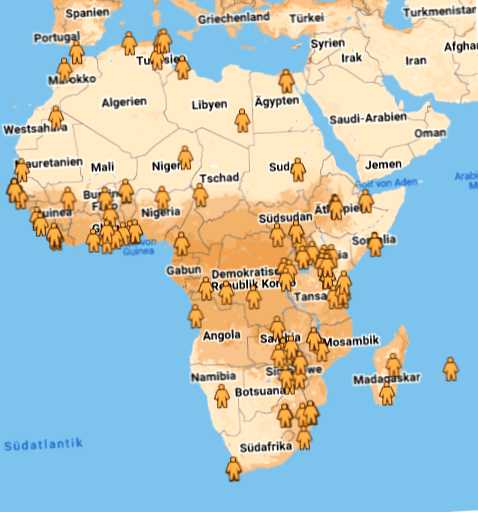
On the spot. Since its founding in 2007, the news agency afrika has been committed to.info advocates for a differentiated perception of Africa. To achieve this, we build on a change of perspective: We work with a first-class network of 150 African correspondents in almost all 55 states of the continent.
Our expertise. africa.info is led by Martin Sturmer, who holds a doctorate in African studies. Our mission is to provide information of the highest content quality. Our clients include leading media houses as well as world-class companies.