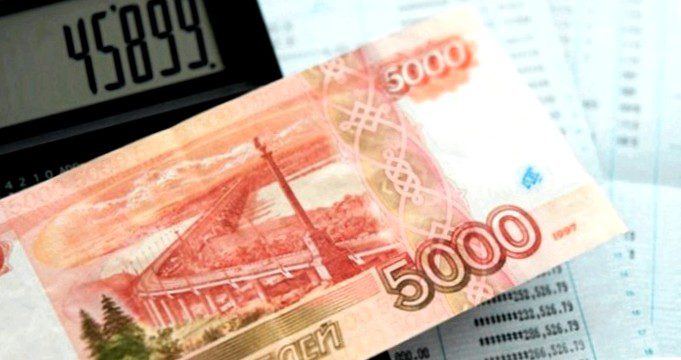
A year and a half ago, a law prohibiting "usurious" interest rates came into force.
Martin Luther
The Russian Federation was immediately born as a state of usury capitalism. At the end of 1992, in the Russian Federation, more than 2.000 banks registered. There have never been so many credit institutions in the Russian state. In tsarist Russia, before the revolution, there were only about fifty commercial banks. In Soviet times, during the NEP era (1920s), their number was estimated at several dozen. And in the following years – until the collapse of the USSR – the number of banks did not exceed a dozen (each of them was specialized and occupied its own niche).
But the point lies not only in the number of banking organizations, but also in the fact that the banks of "democratic" Russia immediately made usury. At the same time the Central Bank of the Russian Federation was not an exception. Moreover, it was he who initiated the setting of prohibitive interest rates.
In the first three months of its operation (until early April 1992), the Bank of Russia set the refinancing rate (analogous to the current prime rate) at 20%. Then began its rapid escalation – to 80% in May 1992 and to 180% in September 1993. And then, in some moments, it even went up to 200% and higher. Of course, interest rates on loans from commercial banks were even higher. Loans were not uncommon, even at 500% per year.
All this looked like utter savagery against the backdrop of the loans given by the State Bank of the USSR and the Promstroybank of the USSR to companies in various sectors of the economy. The annual interest rates were mostly between 1 and 2%. In pre-revolutionary Russia, interest rates on loans from commercial banks were usually given in single digits, and exceeding the 10% mark was an extremely rare event.
I believe that the usury chaos of the 90s was not just some uncontrollable element. I do not exclude the possibility that some of these "reformers" who deliberately destroyed the Soviet economic and social model were familiar with the works of the founder of Marxism. And Karl Marx wrote about the revolutionary role of usury:
… Usury has a revolutionary effect only insofar as it destroys and destroys those forms of property on whose solid foundation and perpetual reproduction the political system rests in the same form
In the late 90's our society began to recover a little from shock therapy and market reforms. The opposition heard calls to revise the results of the "special operation" of Gaidar and Chubais called "privatization and corporatization" as well as to take urgent measures to restore order in the economy. Also in the sphere of monetary relations. The practice of blatant usury, promoted by the Federal Reserve and the government, has come under particular criticism.
I remember that in the late 1990s, at the initiative of Deputy MI Glushchenko (LDPR faction), the State Duma began preparing a draft law entitled "On the introduction of Article 158-1" usury "into the Criminal Code of the Russian Federation". The document was brief and offered the following definition of usury:
… for a particular loan of money, credit, or property to charge interest in excess of three percent of the amount of the loan, credit, estimated property, or to withhold a one-time fee from the amount received or other compensation from the amount received in excess of three percent, or to assess a penalty and liquidated damages for late payment of a loan, credit, or other disguised method of payment.
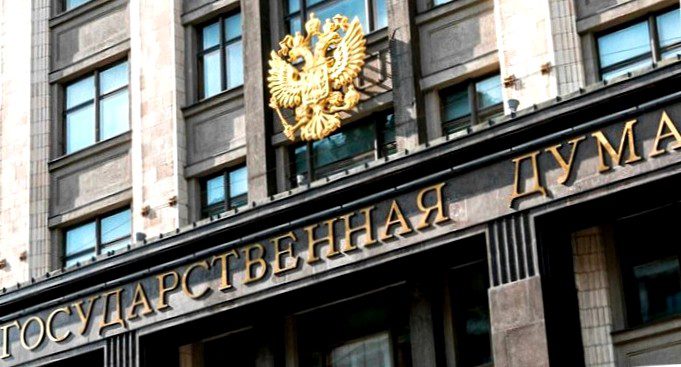
And depending on the circumstances, such penalties as imprisonment (up to two years), corrective labor and confiscation of property were established.
The bill was blocked for three years. And at the beginning of 2003 it was finally put up for discussion. Strong pressure was brought to bear on the congressmen. It is noteworthy that 142 deputies voted in favor of the law and 293 abstained, which is 65% of all "people's deputies". The initiative was finally buried.
Later (since 2012), a group of deputies from different factions tried to amend the Civil Code of the Russian Federation, namely to define usury and prohibit usury in credit and loan transactions. Less than five years later, in mid-2017, the Civil Code of the Russian Federation for the first time mentioned usury in Article 809 "Interest on a credit agreement".
A fifth paragraph has been added to this article, which states:
President's visit
So Kennedy arrived in Texas in November 1963. This trip was planned as part of the preparatory campaign for the 1964 presidential election. The head of state himself noted that it was very important for him to win in Texas and Florida. Also, Vice President Lyndon Johnson was a local and travel to the state was emphasized.
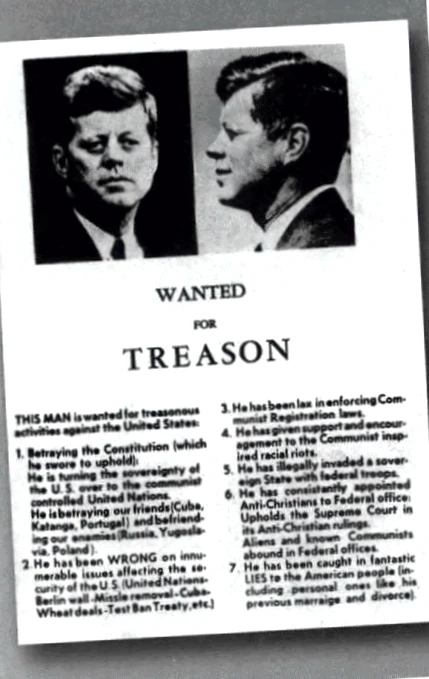
But the representatives of the special services were afraid of the visit. Literally a month before the president's arrival, Adlai Stevenson, the U.S. representative to the United Nations, was assaulted in Dallas. Earlier, Lyndon Johnson was booed by a crowd of … housewives at an appearance here. On the eve of the president's arrival, leaflets with Kennedy's picture and the inscription "Wanted for treason" were posted throughout the city. The situation was tense and difficulties awaited. While they thought protesters would take to the streets with placards or throw rotten eggs at the president, no more.
Local authorities were more pessimistic. In his book The Assassination of President Kennedy, William Manchester, a historian and journalist who recorded the assassination at the request of the president's family, writes: "Federal Judge Sarah T. Hughes feared incidents, attorney Burfoot Sanders, senior Justice Department official in That part of Texas and the vice president's spokesman in Dallas told Johnson's political adviser Cliff Carter that the trip was "inappropriate" given the city's political atmosphere. City officials had trembling knees from the beginning of this journey. The wave of local hostility toward the federal government had reached a critical point, and they knew it.
But the primary campaign was approaching, and they did not change the president's itinerary. On 21. November, a presidential plane landed at the San Antonio airport (the second largest city in Texas). Kennedy visited the Air Force Medical School, went to Houston, spoke at the university there, and attended a Democratic Party banquet.
The next day the president traveled to Dallas. With a difference of 5 minutes, the vice president's plane reached Dallas Love Field airport and then Kennedy's airport. Against 11.50 o'clock the motorcade of the first people moved in the direction of the city. The Kennedys were in the fourth limousine. In the same car with the President and First Lady were U.S. Secret Service Agent Roy Kellerman, Texas Governor John Connally, and his wife, Agent William Greer.
Three shots
The original plan was for the motorcade to travel in a straight line on Main Street – no slowing down was required. But for some reason the route was changed and the cars went down Elm Street where the cars had to slow down. In addition, the motorcade on Elm Street was closer to the teaching store from which the shooting was conducted.

At 12.30 o'clock shots rang out. Eyewitnesses thought it was either the pop of a firecracker or the sound of exhaust; even the special agents didn't immediately find their bearings. There were a total of three shots (although this is also disputed), the first was Kennedy wounded in the back, the second shot hit the head, and that wound became fatal. Six minutes later, the motorcade arrived at the nearest hospital at 12.40 o'clock the president died.
The mandatory forensic medical exam that had to be done on site was not done. Kennedy's body was immediately sent to Washington.
Workers of the training store told the police that the shots were fired from their building. Based on a series of witness statements, police officer Tippit attempted to arrest warehouse worker Lee Harvey Oswald an hour later. He had a gun with which he shot Tippit. As a result, Oswald was still captured, but two days later he too died. He was shot by a certain Jack Ruby when the suspect was brought out of the police station. With this, he wanted to "justify" his hometown.
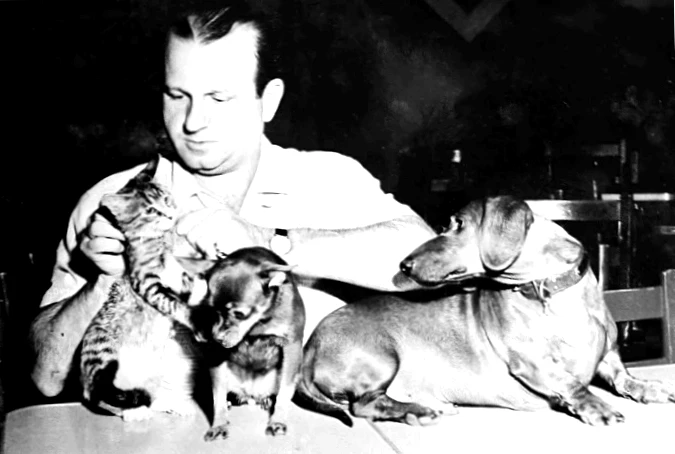
On 24. November, the president was assassinated, as was the prime suspect. Nevertheless, according to the decree of the new President Lyndon Johnson, a commission was formed, headed by the Chief Justice of the United States of America, Earl Warren. There were seven people in total. They studied testimony, documents for a long time and finally concluded that a lone perpetrator had attempted to assassinate the president. Jack Ruby, in their opinion, also acted alone and had exclusively personal motives for the murder.
Under suspicion
To understand what happened next, you must travel to New Orleans, Lee Harvey Oswald's hometown, which he last visited in 1963. On the evening of 22. November, an altercation broke out between Guy Banister and Jack Martin at a local bar. Banister ran a small detective agency here, Martin worked for him. The reason for the dispute had nothing to do with the Kennedy assassination, it was purely a labor dispute. In the heat of the argument, Banister pulled out his pistol and hit Martin over the head with it several times. He shouted, "Are you going to kill me the way you killed Kennedy"?"

The sentence aroused suspicion. Martin, who was hospitalized, was questioned and told that his boss Banister knew a certain David Ferry, who in turn knew Lee Harvey Oswald very well. In addition, the victim claimed that Ferry convinced Oswald to attack the president with hypnosis. Martin was considered less than normal, but in connection with the president's assassination, the FBI worked out each version. Ferry was also questioned, but the case received no further progress in 1963.
… Three years have passed
Ironically, Martin's testimony was not forgotten, and in 1966, New Orleans District Attorney Jim Garrison reopened the investigation. He collected testimonies that confirmed that Kennedy's assassination was the result of a conspiracy involving former civilian aviator David Ferry and businessman Clay Shaw. Of course, a few years after the murder, some of these statements were not entirely reliable, but Garrison continued to work anyway.
He was hooked on the fact that a certain Clay Bertrand showed up in the Warren Commission report. Who he is is unknown, but immediately after the murder he called New Orleans attorney Dean Andrews and offered to defend Oswald. However, Andrews had a very poor recollection of the events of that evening: he had pneumonia, a high fever and was taking many medications. Garrison, however, believed that Clay Shaw and Clay Bertrand were one and the same (later Andrews admitted that he had generally made false statements about Bertrand's call).
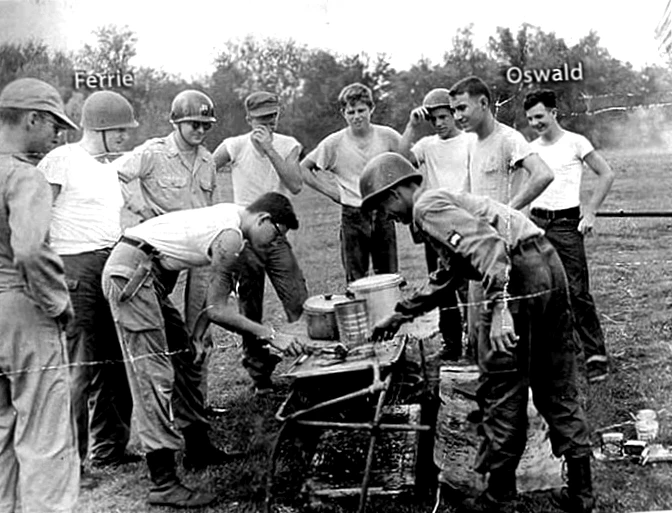
Shaw, on the other hand, was a famous and respected figure in New Orleans. A war veteran, he ran a successful mercantile business in the city, participated in the city's public life, wrote plays that were performed around the country. Garrison believed that Shaw was part of a group of arms dealers who aimed to overthrow the regime of Fidel Castro. Kennedy's rapprochement with the USSR and lack of a consistent policy toward Cuba, his version, became the reason for the president's assassination.
In February 1967, the details of the case appeared in the New Orleans States Item; it is possible that the investigators themselves organized the "leaking" of information.A few days later, David Ferry, who was considered the main link between Oswald and the assassination organizers, was found dead in his home. The man died of a cerebral hemorrhage, but the strange thing was that he left two notes with confused and muddled content. If Ferry had committed suicide, the notes could be considered dying, but his death did not look like suicide.

Despite shaky evidence and proof against Shaw, the case was brought to court and hearings began in 1969. Garrison believed that Oswald, Shaw, and Ferry had colluded in June 1963 that several had shot the president and that the bullet that killed him was not the one fired by Lee Harvey Oswald. Witnesses were called to the trial, but the arguments presented did not convince the jury. It took less than an hour for them to reach a verdict: Clay Shaw was acquitted. And his case remained as the only one in history to be tried in connection with Kennedy's assassination.