One of the most valuable financial companies in the world offers payment and banking solutions, provides loans and enables wealth management to its customers. But this company is not a traditional bank. Chinese provider Ant Financial has built an impressive platform in just a few years. Last year, Jack Ma's FinTech already boasted 1.3 billion monthly active users worldwide, bringing its valuation to more than $200 billion before its canceled IPO. Originally launched as a pure payment provider under the name Alipay, the subsidiary of e-commerce giant Alibaba has managed to expand its business model to include a variety of services to create a complex ecosystem. The world's largest money market fund, Yu'e Bao, is part of Ant Financial, as is credit rating system Sesame Credit and UK-based financial services provider WorldFirst. Ant Financial is always data-driven and successfully covers the alphabet of the Internet: from A for Artificial Intelligence to B for Blockchain and C for Cloud Computing.
In short: Ant Financial is not a classic bank. But the fintech from the Far East is already doing much of what established financial institutions could model for the future: With the intelligent use of data, they can build complex platforms – and thus formulate an answer to the industry's biggest challenges – be it the changing behavior of customers, the new data-driven competition of the fintech scene or the consequences of the persistent low-interest environment.
The consequences of the EU directive PSD2
Since the second version of the Payment Service Directive (PSD2) at the latest, open banking has been on everyone's lips. PSD2 aims to increase competition across Europe as well as the participation of non-banks in the payments industry. The EU directive has successfully set the course for the new openness in banking and encouraged banks to be more willing to share their customers' data with third parties. There will be no turning back.
On the contrary, the topic is likely to gain further momentum with the EU Digital Finance legislative proposal "Open Finance Framework" expected in 2022. For the banks, it is therefore now a matter of understanding open banking as an opportunity for the further development of their own business model – otherwise they run the risk of losing ever greater market shares to the highly agile challengers, some of whom are even from outside the sector, within a short space of time.
The smart handling of data is thus a mandatory program for banks. It is the prerequisite for credit institutions to evolve from product-oriented to customer-centric companies. However, this requires flexible IT. With cloud solutions, financial service providers gain access to resources for storing and processing data that can be scaled almost at will. You get the opportunity to introduce innovative technologies such as artificial intelligence, machine learning or even data analytics to process even the largest amounts of data in the shortest possible time and generate valuable insights into customers and their needs. Thanks to the appropriate interfaces (APIs), they are able to break up their own value chain, integrate third-party services into their own product portfolio, and at the same time meet even the most stringent security, regulatory and compliance requirements at all times thanks to state-of-the-art technologies.
As a result, banks are breaking down their own data silos. They are creating the basis for building their own platforms and ecosystems, which they can continue to expand and enhance with their own services as well as third-party solutions. With Beyond Banking offerings, i.e., services beyond the portfolio of classic banking services, they are integrating themselves ever more deeply into the everyday lives of their customers as retail banks, for example, or can support corporate customers in the business-to-business sector far beyond the traditional lending business.
Platforms for the future of asset management

One example of the possibilities for establishing and using platforms in the financial services sector is provided by the investment company Pimco. Together with the investment management firm Man Group, IHS Markit, State Street, McKinsey and Microsoft, Pimco has founded the HUB company. Based on the Microsoft Azure cloud, HUB is developing a completely new type of asset management platform that provides flexible, modular solutions for middle and back office operations while helping to reduce costs and minimize risks. HUB's data-first approach helps break down silos in their respective companies and strengthen the integration of third-party solutions. Investment and asset managers can effectively drive their digital transformation, and their clients can always benefit from using innovative solutions – today and in the future.
BlackRock provides a similar example. In a strategic partnership with Microsoft, the world's largest asset manager has launched its Aladdin platform in the Azure cloud. Aladdin is BlackRock's end-to-end platform for institutional investors such as asset managers, pension funds and insurers. Aladdin combines and unifies risk analytics with a wide variety of portfolio management tools. By using the cloud, new innovative features can be added to Aladdin and the platform's performance can be significantly increased due to greater computing power. BlackRock's clients will have access to an integrated and scalable platform that can be adapted to the growing complexity of data management and risk management. Here's how they can run their most important and centralized workflows via the cloud. At the same time, this offers BlackRock the opportunity to work even more closely with a wide range of providers from its own ecosystem in the future.
Nasdaq's Marketplace Service Platform provides access to a wide range of services that enable banks and other financial services providers to build their own digital marketplaces. Available via Microsoft Azure, it facilitates the exchange of assets, services or information. Coupled with distributed ledger technology and the possibilities of tokenization, i.e. the digital mapping of physical assets into digital tokens via DLT, financial services can thus be more easily extended to new asset classes.
For example, innovative CO2 trading can be established in this way. Satellite data will be used to calculate the impact of measures that contribute to the sequestration of CO2. The result is digitized and recorded with the help of a token. This is now freely tradable via a digital marketplace and can be purchased by those who in turn generate CO2 and now need a way to offset it.
PwC study 2021: Beyond Banking
Around 95 percent of German banks want to operate their own digital ecosystem or participate in one in the next five years; a good half are already planning to do so in 2022.
As the PwC study, "The New Pillar of the Business Model? Relevance of digital ecosystems for German banks – survey of German bank decision-makers" found that the vast majority of German bank managers surveyed see the relevance of digital ecosystems for the industry increasing significantly due to digitization and new customer needs.
As a result, banks are keen to push ahead with building digital ecosystems. Nearly 60 percent plan to generate more than ten percent of their revenue through digital ecosystems within five years. Time is of the essence: Ecosystems may also emerge in other industries, where customer interfaces are staffed without banks. The build-up will therefore be accelerated by the acquisition of technologies and non-bank products and services.
The orientation of digital ecosystems is focused along the "living" and "mobility" lifeworlds.
The study at a glance: Half of the more than 30 bank board members and executives surveyed see a very high strategic relevance of digital ecosystems for the industry already in the coming year; in five years, almost all respondents expect this to be the case, at 97 percent. Given the expected diversity and potential winner-takes-all developments of network platform products, speed in building digital ecosystems becomes a key success factor.
After all, around 70 percent plan to operate a platform themselves and more than half of the banks have recognized that participation in just one ecosystem will not be enough, but that a multifaceted ecosystem strategy will be critical for success.
Around 90 percent of banks want to use ecosystems to get closer to customers and become more relevant to them in their everyday lives. Platforms offer the opportunity to integrate non-bank products and services from different walks of life into their own offerings. In the future, financial institutions will not only be able to provide customers with traditional financial services, but will also be able to offer health and real estate services in cooperation with partners via a modular IT architecture and API interfaces.
Time to act
The industry has already understood the role that platforms can play for banks in the future. Martin Beyer, CEO of Fiducia & GAD, already called its own platforms a "hub and integration hub for solutions". Christian Sewing, chief executive of Deutsche Bank, has also said that the future of banking is becoming "more and more of a platform industry". A joint study by FINMAS and the Niederrhein University of Applied Sciences, on the other hand, has written the transformation in the direction of the platform economy into the master book of the savings banks.
Now is the time to act. Because the challengers in the platform economy have long since ceased to come only from the U.S. or, as in the case of Ant Financial, from Asia. With Auto1, the latest example of the disruptive power of the platform economy is taking place precisely in Germany. After just a few months on the stock market, the online platform for used cars has risen to the MDax – and further growth seems certain. With Auto1 FT, the used car dealer also has its own financing platform.
The question is therefore not when digital players from outside the industry will penetrate the financial sector via their platform, but what role the banks and established financial service providers will then play. Stand on the edge? Or will they evolve into operators of their own platforms?
Author: Oliver Schwarz
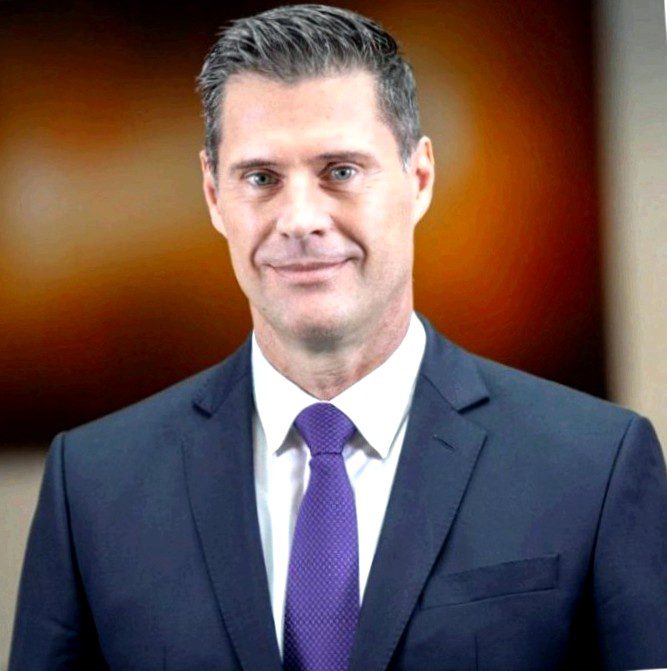
As senior industry executive banking at Microsoft, accompanies financial institutions in the digital transformation. Previously, as Head of Sales Banking at Microsoft, he was responsible for bank sales in Germany. He has more than 25 years of sales and management experience focused on the financial industry, with career stints at Hewlett Packard and Capgemini.